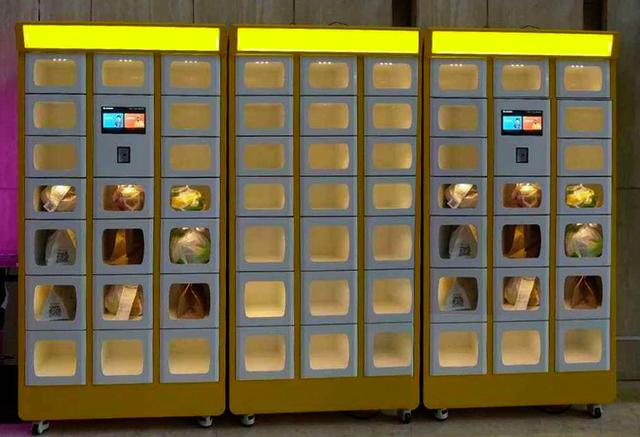
During the pandemic, Meituan, Ele.me, Hema, Luckin, Heytea, and others have heavily promoted contactless delivery and contactless meal pickup services, and the "contactless" business is booming.
Author | Zhang Jilong Editor | Luo Lijuan
"Contactless" business has taken off, which caught Zhou Kang off guard.
Zhou Kang is the sales manager of a company that makes smart meal pickup cabinets and takeout cabinets. Under the impact of the COVID-19 pandemic, many industries have suffered huge losses, but the unmanned retail business represented by smart meal pickup cabinets suddenly "took off," with orders soaring.
"Previously, monthly sales were about 500 units, and in the past month it is expected to be 1,500-2,000 units." Zhou Kang revealed that since the pandemic, a large number of companies have begun to contact them to inquire about deploying meal pickup cabinets. This includes the meal pickup cabinet service recently launched by Meituan in Beijing and Wuhan; Zhou Kang's company is one of the suppliers. "At present, the inventory in the warehouse has been sold out, leaving only the display cabinets in the showroom."
Around 2017 to 2018, unmanned retail concepts represented by unmanned shelves, unmanned supermarkets, smart meal pickup cabinets, and smart express cabinets once stood at the forefront of the trend. Many startup companies obtained large amounts of financing and rushed to expand their businesses. However, not long after, these concepts all faded like a flash in the pan, and related companies continuously experienced layoffs and bankruptcies.
During the pandemic, Meituan, Ele.me, Hema, Luckin, Heytea, and others have heavily promoted contactless delivery and contactless meal pickup services, and the "contactless" business is booming.
On February 4, an unmanned supermarket at Wuhan's "Huoshenshan" Hospital suddenly became a trending topic on Weibo. To reduce the risk of spreading the novel coronavirus, this supermarket was not equipped with cashiers. After customers selected their items, they only needed to scan the code with their mobile phones to complete the purchase. The unmanned supermarket was also open 24 hours, and it received more than 200 people on just its first day of operation.
The supermarket was jointly built by Zhongbai Warehouse and Taoxianda under Alibaba. Zhongbai Warehouse was responsible for supplying goods, while Taoxianda provided the unmanned cashier system.
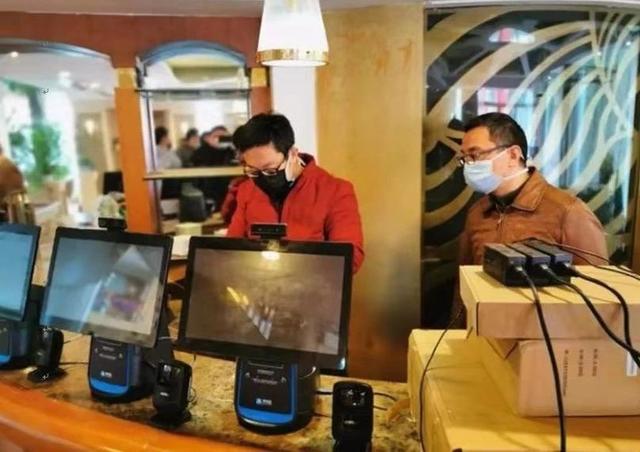
Unmanned supermarket at Wuhan's "Huoshenshan" Hospital
Because the novel coronavirus has strong human-to-human transmission characteristics, in order to prevent and control the pandemic, contactless delivery has become a rigid demand at present.
Recently, government departments including the State Post Bureau, the Shandong Provincial Market Supervision Administration, and the Hefei Economic and Technological Development Zone Market Supervision Administration have successively issued notices encouraging the full implementation of "contactless delivery" services.
On January 26, Meituan Takeout urgently launched "contactless delivery," prioritizing a pilot in Wuhan and gradually covering the whole country. An announcement released by Meituan Takeout showed that when placing an order, users can negotiate a designated location for the product to be placed through "order notes," phone calls, the in-app messaging system, and other methods, such as the company front desk or the doorstep. After delivery, the rider will notify the user through phone calls and the app and other channels to pick up the meal themselves.
On January 30, Meituan announced that "contactless delivery" would be further upgraded in the near future, taking the lead in piloting "Meituan Smart Meal Pickup Cabinets" in Wuhan and Beijing to provide convenient services for users in residential communities and hospitals.
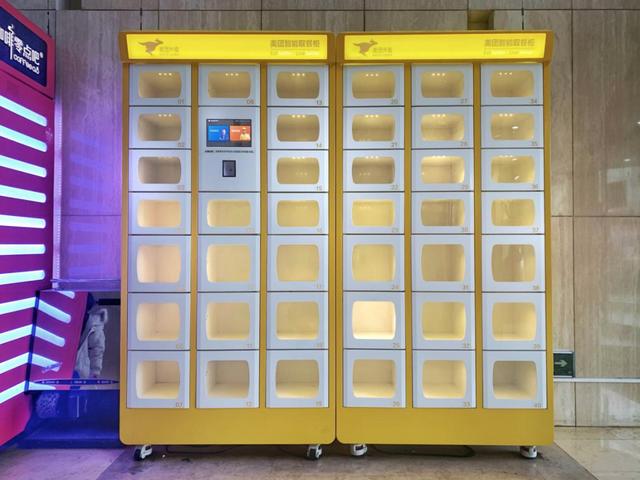
Smart meal pickup cabinets deployed by Meituan
Tmall Supermarket, Hema, Ele.me, KFC, and Pizza Hut have also successively launched "contactless delivery" services or "contactless pickup" services. Consumers can choose "contactless delivery" in the order notes column to request that the goods be placed in a designated location such as the door or front desk. After the rider has placed them properly, they can go pick them up without direct contact.
The catering industry is the hardest-hit area in this pandemic. For example, the new tea beverage company Heytea closed 8 stores in Hubei. A relevant person in charge revealed that in other regions it also closed more than half of its stores in accordance with government requirements. "During the closure period, all employees' salaries are still paid." Luckin Coffee also stated that the company launched a pandemic prevention and control plan immediately on January 21. Apart from normal operations in some areas, all Luckin Coffee stores in Wuhan have been closed since January 23 and will not operate during the Spring Festival.
In order to save themselves and maintain operations, Heytea and Luckin Coffee began to focus on unmanned retail. Heytea has now launched tea pickup cabinets in 150 stores across multiple cities nationwide, including Shenzhen, Chongqing, Beijing, and Nanjing. After users place orders online, once the tea drinks are made, the staff will place the tea drinks in the cabinet and then notify them for pickup. From placing the order to picking up the goods, there is no need for any contact with the staff.
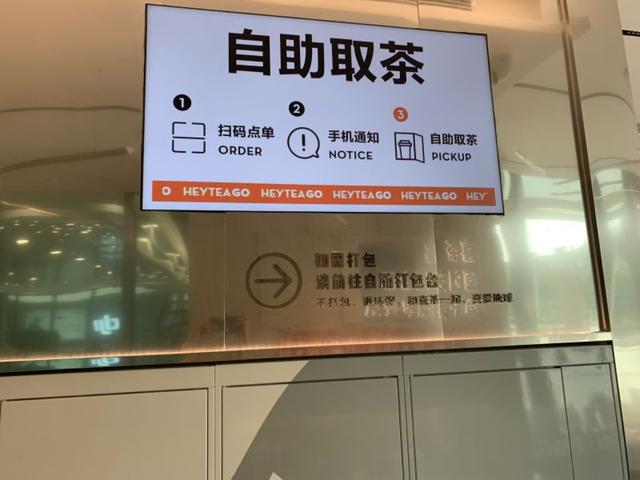
Heytea self-service tea pickup cabinet
And the smart unmanned retail strategy that Luckin Coffee had previously released to reduce channel costs also came in handy. In early January, Luckin Coffee announced the launch of the unmanned coffee machine "Ruijigou" and the unmanned vending machine "Ruihuashuan." According to Luckin, the original intention of these two new business formats was to save high personnel and decoration costs, significantly reduce rent, accelerate the expansion of customer scale, and increase customer consumption frequency.
But under the pandemic, unmanned retail has ushered in new opportunities. "As far as Luckin is concerned, store retail has been affected, but it is time for unmanned retail coffee to make a move." Recently, Luckin Coffee CMO Yang Fei said in a WeChat Moments post that the pneumonia pandemic contains opportunities within the crisis. Companies need to control cash flow and at the same time ponder the new demands both during and after the pandemic. "During the 2003 SARS outbreak, Liu Qiangdong closed offline stores and moved online, which later became JD.com."
Since returning to work after the Spring Festival on February 3, Zhou Kang's phone has been almost exploding with calls. While responding to All-Weather Technology, within ten minutes he simultaneously handled inquiries from three customers via WeChat and phone calls.
But in his view, before 2019, this industry had always been lukewarm.
As early as 2015, Zhou Kang's company entered the smart meal pickup cabinet industry and developed its first smart meal pickup cabinet the following year. It then established a central kitchen and set up a delivery team for pilot testing, hoping to use this to enter the catering industry. But the operating situation was not as expected.
Around 2017, the unmanned retail concept rose, and smart meal pickup cabinets welcomed their first wave. Zhou Kang revealed that at the time they signed cooperation agreements with Alibaba, Koubei, Ele.me, Meituan, and others to provide them with equipment. Pilots were conducted at Meituan's Beijing headquarters building and Ele.me's Shanghai headquarters building. "The usage effect and usage rate were both good. The smart takeout meal pickup cabinets deployed at Meituan's headquarters had an average single-compartment daily usage count as high as 8-10 times."
However, afterward, neither Meituan nor Ele.me vigorously promoted meal pickup cabinets.
In fact, the advantages of meal pickup cabinets are obvious. They can not only solve the phenomenon of randomly placed takeout in office buildings and universities and plan a safe and orderly takeout environment, but also avoid possible risks. Zhou Kang mentioned, "Universities and office buildings generally have the phenomenon of lost takeout. In fact, it is not that many people maliciously steal takeout, but when people take the wrong takeout, a vicious cycle occurs, ultimately resulting in someone always losing their takeout."
Meal pickup cabinets are also welcomed by delivery riders and catering companies. For delivery riders, because smart meal pickup cabinets allow unified storage and do not require one-on-one delivery to people, they can save delivery time, reduce delivery pressure, and increase delivery efficiency. For catering companies, they can also increase table turnover rate, reduce costs, and increase revenue.
Even so, over the past several years, the smart meal pickup cabinet business has not achieved an explosive breakthrough.
"Takeout is a product of the lazy economy. Most consumers order takeout for convenience, and if users need to go downstairs to a meal pickup cabinet to pick up their food, especially if there are multiple meal pickup cabinets to find, then the experience will be relatively poor," one consumer believed.
From Zhou Kang's perspective, he believes the bigger reason meal pickup cabinets were not popular in the past was that "the math did not work out."
He explained that there are currently several profit models for meal pickup cabinets. For example, the takeout platform funds the deployment, and cooperative merchants who want to use the takeout cabinet pay a commission to the takeout platform. The takeout platform can also profit through cabinet body advertising and display screen advertising. "After all, the usage frequency of takeout cabinets is currently even higher than that of express cabinets."
Another profit model is charging delivery riders. "Delivery riders are generally quite willing to use meal pickup cabinets. It can save them a large amount of time, allow them to take several more orders for delivery during peak periods, and also ease delivery pressure."
But overall, the profit obtained from simply operating meal pickup cabinets is very thin. There are few companies on the market that rely solely on operating meal pickup cabinets, and manufacturers of meal pickup cabinets mainly rely on manufacturing and sales as their main source of profit. More often, meal pickup cabinet operators are group meal companies, which go deep into the upstream of the industry and profit through comprehensive capabilities such as equipment sales, ingredient sales, group meal services, and SAAS services.
According to data from the National Bureau of Statistics, in 2018 China's catering revenue was 3,376.9 billion yuan, among which group meal revenue was the highest, reaching 1,200.3 billion yuan, accounting for about 30.28%.
"Group meal companies use smart meal pickup cabinets the most, and the reuse rate of takeout cabinets is the highest," said another person from the smart meal pickup cabinet industry. Group meal companies currently have two operating models. One is entering the client party, that is, group meal companies serve government agencies, enterprises and institutions, schools, the military, factories, and others by contracting canteens. The second is the central kitchen model, completing meal processing and production, and then delivering at fixed times. In both models, meal pickup cabinets can play a role in reducing queuing and lowering labor costs.
In addition to low operating profit, for companies operating smart meal pickup cabinets, the cost of smart meal pickup cabinets is high, so implementation also faces problems.
Taking common meal pickup cabinets on the market as an example, prices currently range from several thousand to tens of thousands. Zhou Kang said that the negotiated price of the meal pickup cabinets produced by their company is 6,000 to 10,000 yuan. Among them, a machine listed at 10,000 yuan has 32 compartments, is equipped with a 10.1-inch LCD touch display, supports touchscreen operation, and uses QR code meal pickup.
Unlike parcel lockers, because food delivery is consumed more frequently, "a 22-compartment meal pickup locker has an average daily opening count of more than 100 times," Zhou Kang revealed. Also because demand is too great, if meal pickup lockers are deployed in a residential community or office building, their number must far exceed that of parcel lockers, which is a high cost.
In addition, if meal pickup lockers want to be deployed in a residential community or office building, they still have to pass the hurdle of property management. Whether to allow them, how to place them, where to place them, and how many to place all need to be discussed jointly with the property management company. Some property managers worry that smart food delivery pickup lockers will proliferate like shared bike brands and then end hastily, so most maintain a relatively cautious attitude.
For this reason, some property managers have charged substantial entry fees. Taking smart parcel lockers as an example, previous media reports said that parcel lockers entering a residential community need to pay an entry fee, at least 6,000 yuan and up to more than 10,000 yuan.
However, under the epidemic, the problem faced by meal pickup lockers has been greatly improved. A person operating meal pickup lockers said that recently "many residential communities have taken the initiative to contact us and let us deploy meal pickup lockers for free."
In Zhou Kang's view, this epidemic will be a major opportunity for smart meal pickup lockers. "In the past, Meituan and others only ran pilot programs, but now they have made smart meal pickup lockers a very important strategic direction.
At Alibaba's Taobao Maker Festival in early July 2017, Alibaba launched the unmanned store "Tao Cafe" experience. For a time, the concept of unmanned retail became the focus of capital pursuit. E-commerce giants including JD.com and Suning, as well as startups such as BingoBox, F5 Future Store, Xiaomai Pu, and Xingbianli, all rushed into the unmanned supermarket field.
According to incomplete statistics, in 2017 alone, a total of 25,000 unmanned retail shelves were deployed nationwide, 200 unmanned supermarkets were deployed, and the unmanned retail market raised more than 4 billion RMB in total financing.
At that time, unmanned retail mainly had three forms: vending machines, unmanned convenience stores, and unattended office shelves. Today's popular "contactless" concept adds a segmented form like smart meal pickup lockers beyond these forms.
However, the good times did not last long. In July 2017, Shanghai's first unmanned convenience store, "BingoBox," announced closure just one month after opening. At the end of 2018, news of layoffs and a broken capital chain at Xingbianli spread one after another. By the end of 2018, the dozens of unmanned shelf companies that had emerged earlier had basically gone bankrupt or transformed.
So, is the unmanned retail that has risen with the epidemic this time another flash in the pan, or has it ushered in a new development opportunity? The core of the problem may point to issues of user experience and enterprise costs.
According to some industry insiders, previous unmanned supermarkets reduced the labor cost of cashiers, but the cost of cashiers is actually the lowest cost in the retail industry. The other technology costs added to replace cashiers are instead higher, such as investment in cameras, GPUs, and gravity sensing equipment.
In terms of user experience, taking smart parcel lockers as an example, couriers placing packages into parcel lockers without notifying recipients has drawn complaints from many users. In August 2019, the State Post Bureau recently published the "Administrative Measures for Express Delivery Services of Smart Express Boxes," requiring that enterprises using smart express boxes to deliver express items should obtain the recipient's consent.
Under the epidemic, because unmanned retail avoids person-to-person contact, it has instead been welcomed by users and promoted from the top down. On January 23, the State Post Bureau issued an emergency notice requiring that for mail and express items sent to Wuhan, delivery personnel should contact recipients by phone to arrange delivery, with priority given to delivery into smart express boxes to reduce person-to-person contact. Various delivery service companies have also launched contactless services.
In terms of cutting costs, Luckin Coffee's unmanned retail strategy directly pointed out that the coffee sold by its unmanned retail brand Luckin Instant and the coffee products in stores are completely the same in quality, price, discounts, and portion size. "Compared with stores, the unmanned retail model is lighter and does not require heavy store decoration; the machines are also more flexible and can enter a site at any time, be adjusted at any time, and are not limited by venue," said Luckin Coffee CEO Qian Zhiya. The machines of Luckin Instant and Luckin Cheap can be placed in lobbies, offices, and any place that can get close to consumers, expanding Luckin's service scenarios to a certain extent.
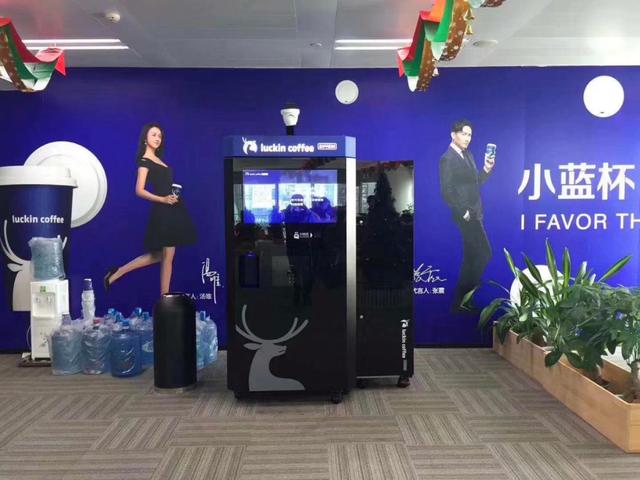
Luckin's unmanned coffee machine
In addition, for Luckin Coffee, unmanned retail can greatly reduce high personnel and decoration costs and substantially reduce venue rent. According to Luckin's Q3 2019 financial report, store rent and other operating costs accounted for 32% of product revenue. Relative to these costs, the price of unmanned coffee machines is not expensive. According to Alibaba's 1688, the prices of unmanned self-service coffee machines range from more than 5,000 yuan to 60,000 yuan, with 20,000 to 30,000 yuan being more common.
Now, the largest expenditures of most domestic cafes are rent, labor, and materials. It is estimated that each operator can maintain 10 unmanned coffee machines at the same time. Even if made with the same materials, the selling price of a cup of coffee can be compressed by more than 50%, and the production speed is fast, the price is low, and the taste is not inferior to some ordinary cafes.
Luckin also said that the biggest feature of "Luckin Cheap" is greatly reducing channel costs, and users can buy at e-commerce prices offline.
In fact, as early as 2017, unmanned coffee machines had a wave of expansion. But many players were busy occupying the market and ignored refined and standardized operation of locations, and were gradually eliminated.
The epidemic has brought a new wave of popularity for unmanned concepts such as smart meal pickup lockers and unmanned coffee machines, but to achieve long-term development, in the final analysis it still has to return to refined operation.

Room 1409, Building C, Shenzhen Century Industrial Center, No. 743 Zhoushi Road, Hezhou Community, Hangcheng Sub-district, Bao'an District, Shenzhen